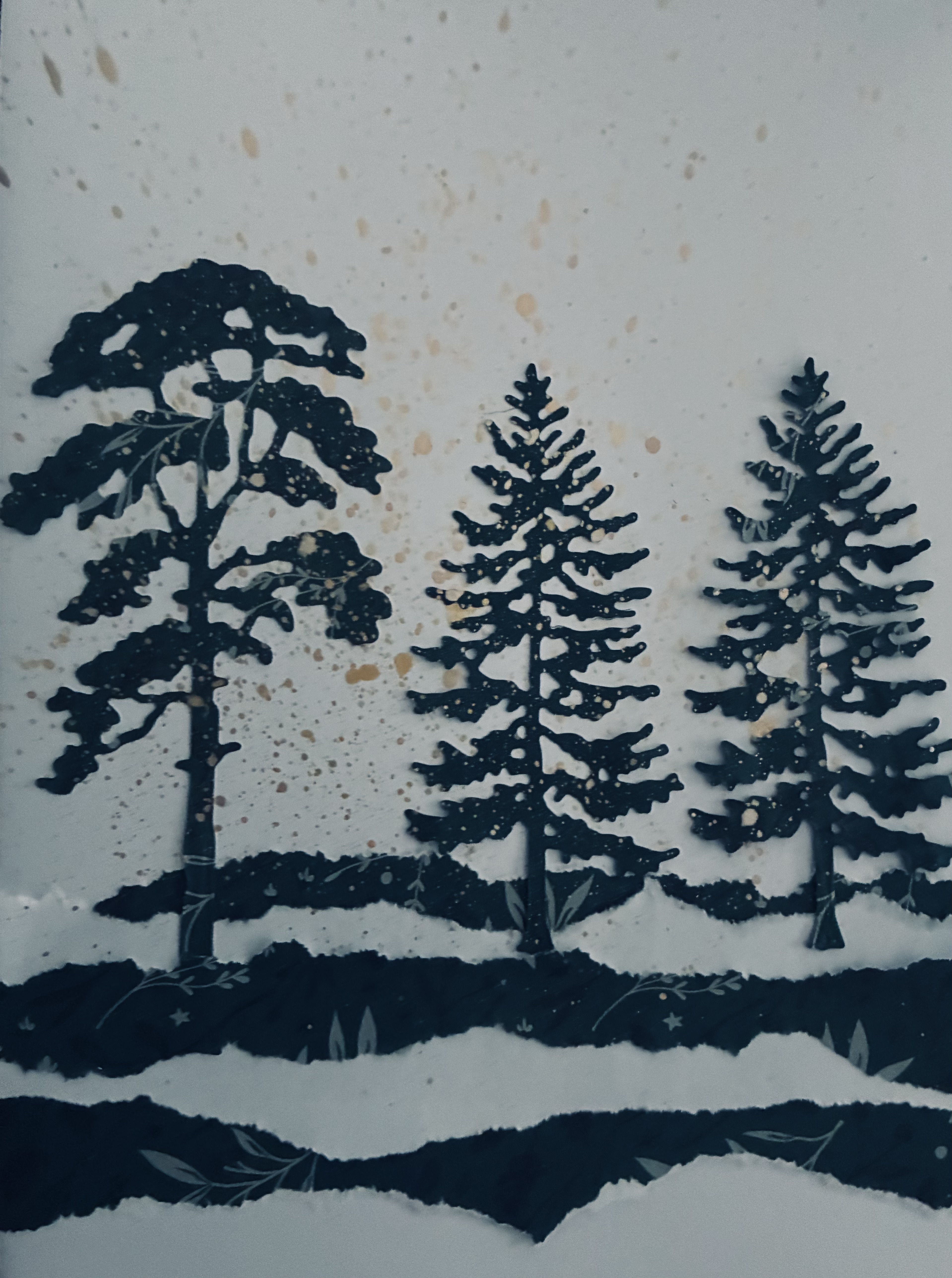
Winter Trees (2025) Paper Collage
Despite starting the new year with a headache (not alcohol induced), I was thinking about how 2025 was exceptionally good to me. Reflecting on the past year, I realized that taking a leap of faith by setting myself up as a freelance artist and tutor was one of the best decisions I’ve ever made. The uncertainty was daunting at first, but with hard work and determination, it has worked out in my favour. I now feel in control of my professional journey, and the flexibility of freelance life has allowed me to cultivate a good work/life balance that I struggled with so much before. My daily interactions now, Remind me of the passion that originally fuelled my decision.
For some of my friends and family though, the year has dealt some devastating and heartbreaking blows. Life is indeed short, and amidst all the unpredictability it brings, one of the most important things we can do is take charge of our mental and physical wellbeing. It’s essential to prioritize our own health and happiness, even when faced with challenges. I’m not suggesting that anyone should recklessly abandon life as you know it, but I encourage taking a small step toward doing something you’ve always wanted to do, a ‘dream’ (a cliche, maybe a better word is … aim, or intention) you’ve put on hold for too long.
There’s a lot to be said for a cliched bucket list, for instance, sunrises are undeniably beautiful, and the best part? They are free, available to everyone in any corner of the world. Getting up early also makes me feel virtuous and taking a moment to appreciate a sunrise and take a breath, gives me the chance to mentally plan my day. Don’t get me wrong, it’s not all conducive to the spiritual experience it sounds as I’m usually multi tasking already taking my little dog out for her toilet walk, but, you know….thats nice too.
Additionally, decluttering physical objects really helps to declutter your mind. It’s more than just tidying up; it’s therapeutic. It allows you to create space for new experiences, or just create space. By clearing your environment, you can create a peaceful sanctuary that contributes positively to your mental state.
Oh, and before I forget, I must remind you to wrap up warm and go outside tonight (3 Jan). Look up at the sky; the Quadrantid meteor shower will be amazing! Watching the stars blaze across the night sky is not just a beautiful spectacle but can be immensely soothing to the soul. The best viewing times are usually around or after midnight, so gather a few blankets, perhaps a warm drink, and enjoy this cosmic display.
So, instead of the usual celebratory New Year post filled with standard promises, hopes, and resolutions that often fade by February, I will simply say this: I sincerely hope that 2026 is good to you. May it bring you joy, fulfillment, and countless opportunities to embrace everything that life has to offer. Take the time to forge connections, create memories, and above all, chase after the things that set your heart on fire.


 Samantha Humphreys