So as my birthday treat to myself, I took myself off to London for a day filled with art, art, and more art. First, I went to Tate Modern, my favourite art gallery because there is so much variety, so much to see, hear, and explore. The moment I stepped inside, I walked through the expansive galleries, as always, I look in awe at the incredible installations that seemed to challenge the very notion of art itself. As I ventured through the exhibits, I found myself lost in thoughts about the artists’ intentions and the stories behind their works, which made the experience even more enriching and memorable.
What I love about the Tate is that each time I look at art that I have already seen once or more times before, I see or experience something different.
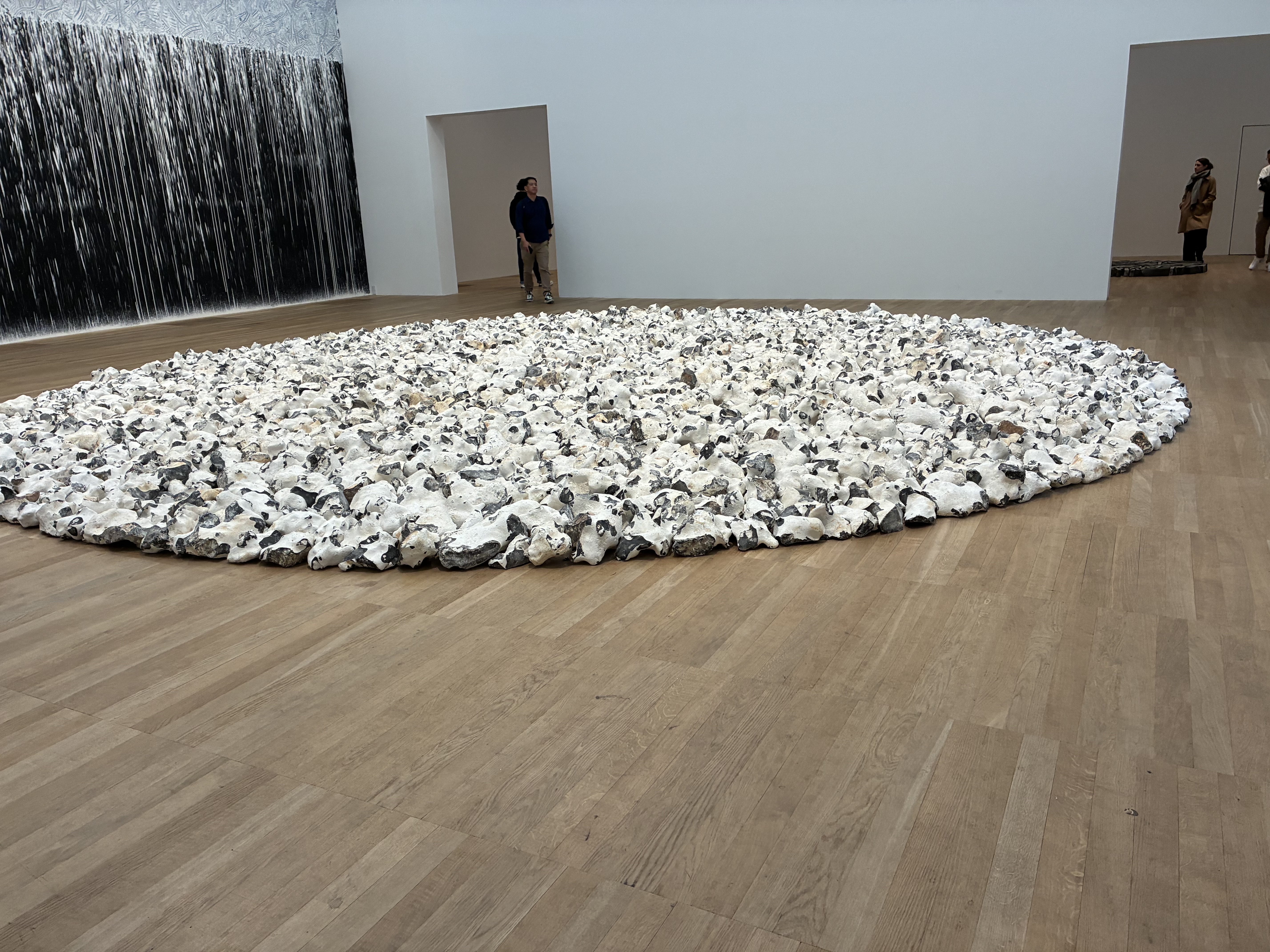
I went into the room showing work by Richard Long. I have long admired his site specific works documenting the interactions between humans and the environment such as A Line Made by Walking (1967). I was drawn this time to works made by creating circles, something that recurs in my own practice as does work borne of my walking routine.
Norfolk Flint Circle (1990) Richard Long
The installation Norfolk Flint Circle (1990) is interesting not only due to the satisfying perfection of a circle formed of meticulously placed flint but how bringing inside objects that are meant for the outside instantly shifts the importance of them. Placed outside as are some of the artists other circular structures, the flint pieces are part of the site, belonging to the earth, the surroundings. The decision to bring those elements inside, spending time and money transporting them and carefully arranging them in a large indoor room meant just for them, makes it almost an act of worship.
Indeed, nature is forceful and should be respected which I why I felt that this artwork was incredibly impactful.
Then I walked to The National Portrait Gallery to see the Lucien Freud exhibition, it was a gorgeous day still. I walked through St James Park and noticed a little cottage with an allotment, London is so strange with these quirky happenings in the most unlikely places. On the lake, there were black swans, I’ve never seen those before either. The National Portrait Gallery is a stark contrast to the Tate Modern. The experience is a formal one, which befits the formal nature of the artworks on show.
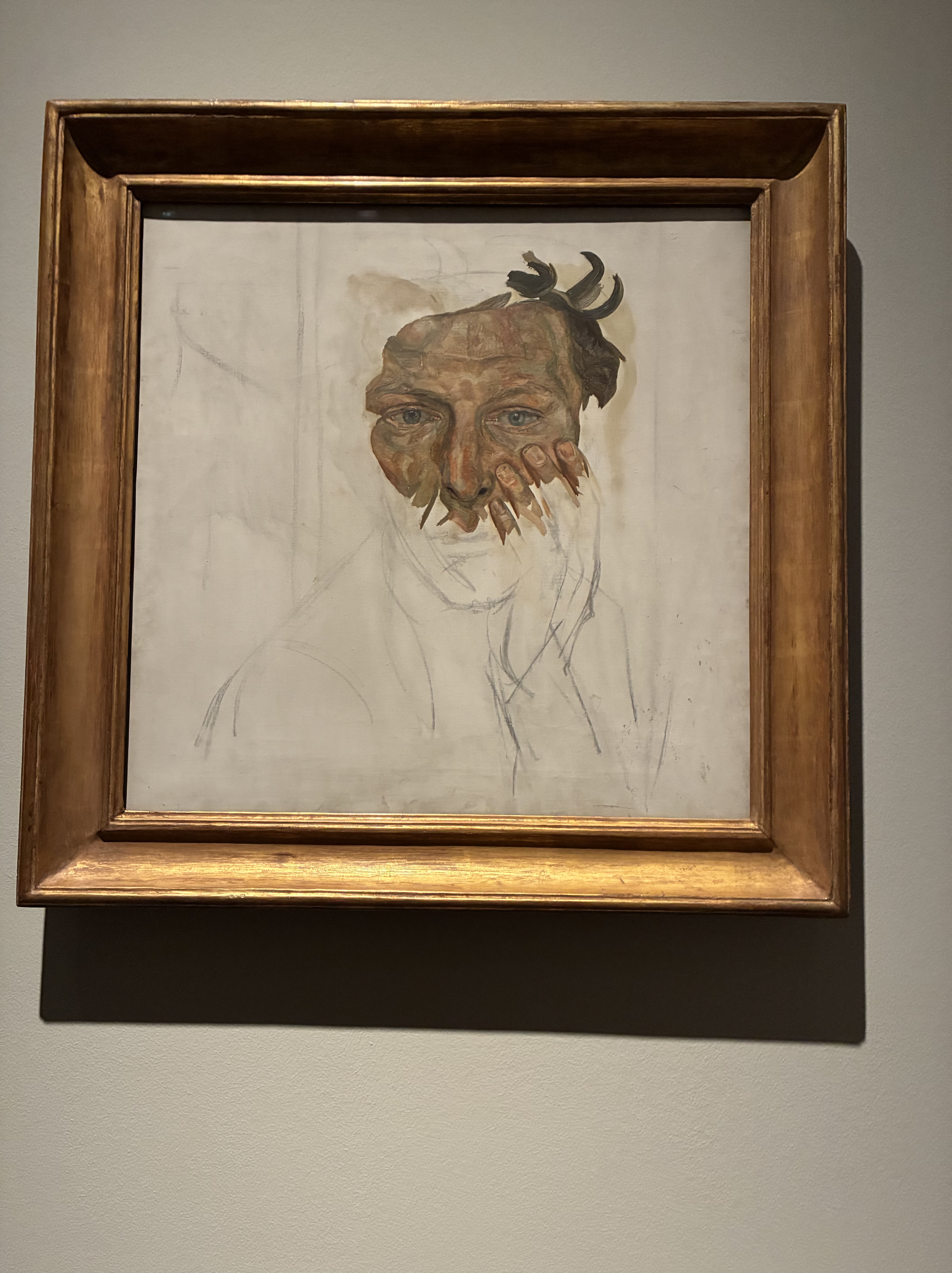
Self Portrait Fragment (1956) Lucien Freud
Freud is an artist that I have neither studied or taught in detail but that made it all the more enjoyable as I was viewing with fresh eyes. As always I was drawn to the organic materials that were either unfinished or considered a draught or preliminary work. I am more often than not more excited by this matter than I am by final outcomes and framed work. There is something about seeing up close the process of a wonderfully executed painting emerging from a charcoal sketch that fills me with joy! it gives the painting life and is rich with texture and structure. I feel that it is my enthusiasm for these insights into the processes of other artists that has hd the most impact on my own artistic practices. It is why I like to leave sketch marks under my own paintings and why I like to see less than perfect finishes on my printmaking, the ‘printiness’ that a graphic designer would be brought to tears by.
As well as the many self portraits, Freud utilised the people around him as his subject matter, his wife Kitty Garman is tenderly portrayed in many paintings. What was particularly pleasing to see was the charming little collection of drawings from the artist as a child, typically childlike like the kind we find on every family household fridge.
“Every child is an artist. The problem is how to remain an artist once we grow up,” -Attributed to Pablo Picasso
 Samantha Humphreys